
Written by: R∴W∴ Don Goss
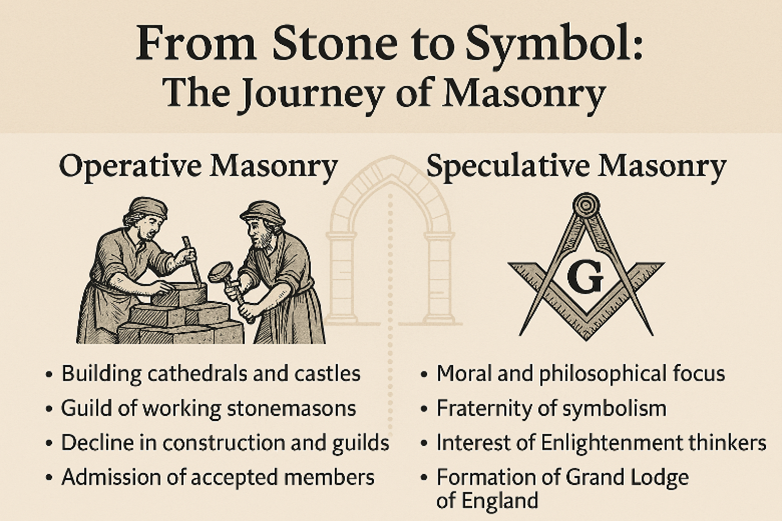
Freemasonry’s transformation from a guild of working stonemasons into a fraternity of moral and philosophical builders is one of the most remarkable evolution’s in Western history. It didn’t happen overnight, nor was it the result of a single event. Instead, it emerged from a convergence of social, economic, and intellectual forces that reshaped Europe—and, in turn, reshaped the Craft.
Understanding this transition isn’t just an exercise in historical curiosity. It offers a powerful lesson for modern Masons and for any organization seeking to remain relevant while staying true to its roots.
The World That Operative Masonry Built
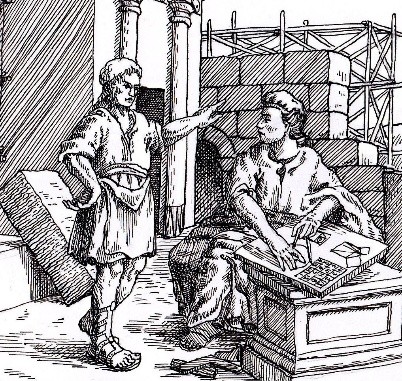
For centuries, operative masons were essential to society. They built cathedrals, castles, bridges, and the great civic structures that defined medieval and early‑modern Europe. Their lodges were practical workplaces—centers of training, craftsmanship, and professional regulation.
But by the 1600s, the world was changing.
- Cathedral building slowed as Europe shifted away from massive stone construction.
- Guilds lost influence as centralized governments and new economic systems emerged.
- Traveling craftsmen became less necessary, replaced by permanent local labor forces.
- The Renaissance and Enlightenment sparked new interest in science, symbolism, and moral philosophy.
The operative lodges, once bustling centers of skilled labor, faced a simple reality: their original purpose was fading.
Why Speculative Members Were Admitted
As the practical need for operative lodges declined, many lodges began admitting “accepted” or speculative members—men who were not stonemasons but were drawn to the fraternity’s symbolism, structure, and moral teachings.
Several forces drove this shift:
1. Intellectual Curiosity and the Rise of Enlightenment Thought
Educated men of the 17th century were fascinated by geometry, symbolism, and the idea of universal moral truths. The lodge offered a structured environment for philosophical exploration.
2. Social Stability and Respectability
Lodges provided a space where men of different backgrounds could meet as equals—an appealing idea in a world still shaped by rigid class divisions.
3. Preservation of Tradition
As operative work declined, lodges sought ways to preserve their heritage. Admitting speculative members kept the organization alive and allowed its symbolism to flourish in new ways.
4. A Shift from Physical to Moral Architecture
The tools of the trade—square, compasses, level, plumb—became metaphors for building character rather than cathedrals. This shift allowed Masonry to transcend its original profession and become a universal fraternity.
By the early 1700s, speculative Masonry had become the dominant form, culminating in the formation of the Grand Lodge of England in 1717.
What This Transformation Teaches Us Today
The transition from operative to speculative Masonry is more than a historical footnote. It’s a masterclass in adaptation, relevance, and the power of symbolism.
1. Tradition Thrives When It Evolves
The Craft survived because it embraced change without abandoning its core identity. The tools remained the same—but their meaning deepened.
Modern organizations, including our own lodges, face similar pressures. The lesson is clear: evolution is not betrayal. It is preservation.
2. Purpose Must Be Larger Than Function
Operative Masonry was tied to a specific trade. Speculative Masonry expanded its purpose to something timeless: the moral and spiritual improvement of humanity.
When a group’s purpose is universal, it endures.
3. Symbols Gain Power When They Speak to the Heart
A chisel or a square is just a tool—until it becomes a symbol of discipline, integrity, and self‑mastery. The speculative transition teaches us that meaning is what gives an organization its soul.
4. Inclusivity Strengthens Community
By opening its doors to men outside the trade, Masonry gained thinkers, leaders, and visionaries who helped shape its future. Welcoming diverse perspectives is not a threat; it is a source of strength.
5. Relevance Requires Courage
The lodges of the 1600s could have clung stubbornly to their operative identity and faded into obscurity. Instead, they had the courage to redefine themselves.
Every lodge today faces the same choice: cling to comfort or embrace growth.
A Living Legacy
The transition from operative to speculative Masonry is a testament to the Craft’s resilience and wisdom. It shows that even the most ancient traditions can adapt to new eras without losing their essence.
Today, when we open a lodge, we are not building cathedrals of stone. We are building something far more enduring: character, brotherhood, and a shared commitment to making good men better.
And just as our operative forebears shaped the world with their hands, we shape it with our actions.