
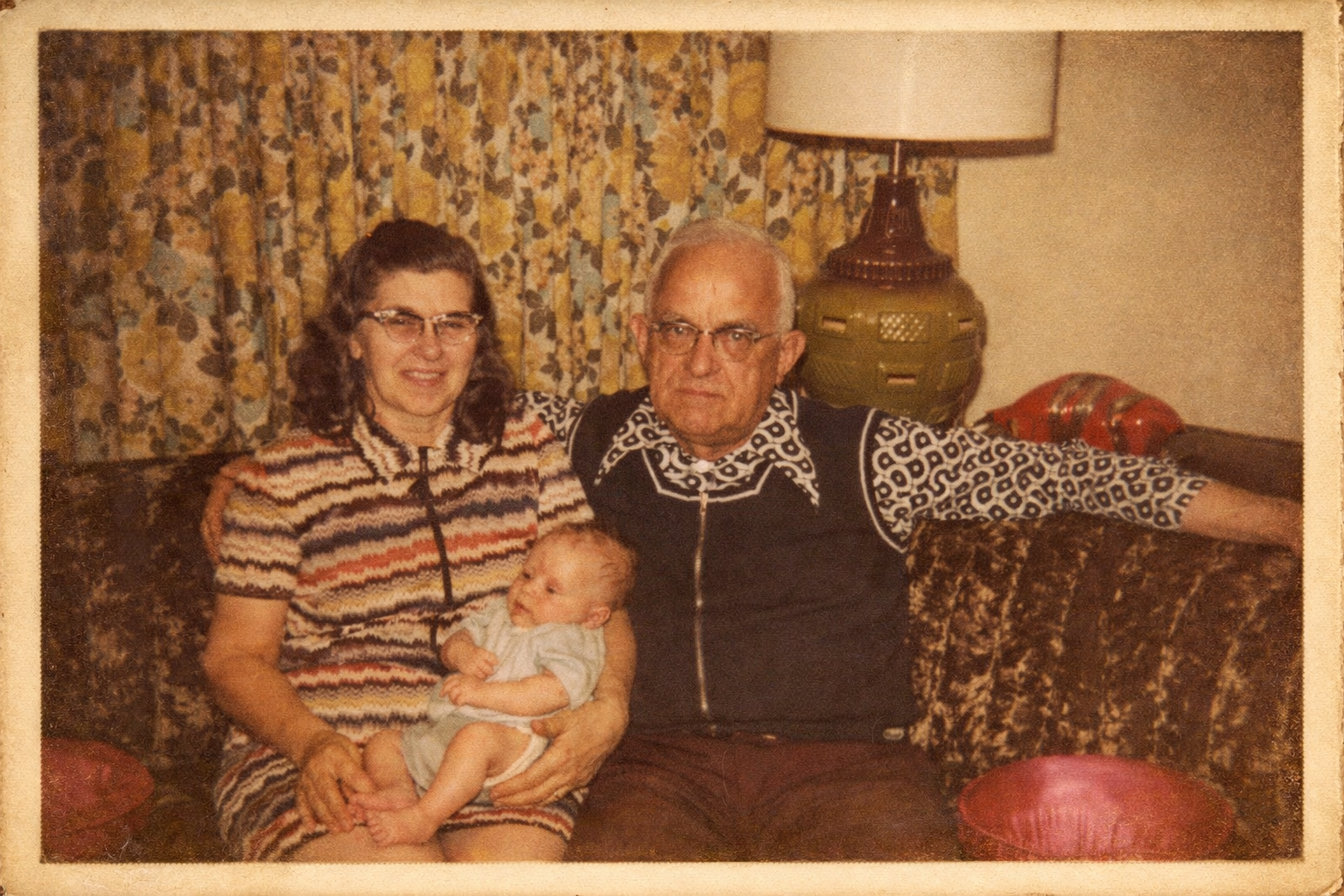
Researched and Written By: Don Goss
I don’t think anyone realizes they’re living through a defining decade while they’re in it. At the time, the 1970s just felt like life—busy, loud, full of responsibility, and moving faster than I could always keep up with. But looking back now, I can see how those years shaped me, shaped my family, and set the rhythm for everything that came after.
I was a younger man then, though I didn’t feel young. I carried myself like someone who had already lived a full life—shoulders squared, jaw set, always thinking about the next task, the next bill, the next decision that needed making. But I had a family depending on me, and that was enough to keep my feet on the ground and my hands moving.
Home Was the Center of Everything
Our house in those days was never quiet. The kids were always running through the rooms, slamming doors, laughing, arguing, asking questions faster than I could answer them. Supper time was the one moment of peace we insisted on. No matter what kind of day I’d had, I made sure I was home for dinner. I believed then—and still do—that a family who sits together stays together.
I can still picture the kitchen: the warm light, the clatter of pots, the smell of supper drifting through the house. Those were the moments that steadied me. I’d sit at the head of the table, listening to the kids talk over each other, watching them grow right in front of me. I didn’t say much unless I needed to. I’ve always believed a man should listen twice as much as he speaks.
Florida Was Changing, and So Was I
Florida in the 1970s was a different place than the one I grew up in. Highways were stretching out like veins across the state, new families were moving in, and small towns were turning into something bigger. Sometimes I’d drive down a road I’d known all my life and barely recognize it.
But I wasn’t one to complain about change. I just kept working, kept showing up, kept doing what needed to be done. That’s how I was raised. You don’t fight the tide—you learn to stand firm in it.
Work, Reputation, and the Weight of Responsibility
By the mid‑70s, I had built a name for myself—not because I sought attention, but because I did my job the way it ought to be done. People knew they could count on me. If I said I’d be there, I was there. If I promised something, I delivered. That was enough to earn respect in those days.
I remember the day the newspaper took my picture for that leadership award. I didn’t think much of it at the time. I stood there, hands clasped, trying not to look awkward while the photographer fiddled with his equipment. But when I saw the photo later, I felt something I didn’t expect—pride. Not for the award itself, but for what it represented: years of steady work, years of doing right by people even when no one was watching.
Raising a Family the Only Way I Knew How
I believed in teaching my kids responsibility early. Not because I wanted to be hard on them, but because I wanted them to grow into people who could stand on their own two feet. They helped with chores, with yard work, with whatever needed doing. And when a neighbor needed a hand, we went. That’s how you build character—by showing up for others.
But it wasn’t all work. There were fishing trips, Sunday drives, afternoons spent under the shade of old oaks. I can still hear the sound of the kids laughing in the yard, the screen door slamming behind them, the radio humming some country tune in the background. Those were the moments that made the hard days worth it.
Faith Was the Anchor
Church wasn’t just a place we went on Sundays—it was part of who we were. I didn’t make a show of my faith, but I lived it. I volunteered, I helped where I could, and I tried to be the kind of man who didn’t just talk about values but lived them out loud.
People came to me for advice sometimes. I never thought of myself as a leader, but I suppose leadership finds you when you’re consistent enough.
The Quiet Victories
The 1970s weren’t dramatic for us. There were no grand turning points, no sudden upheavals. Instead, it was a decade built from small, steady victories: a paid bill, a repaired roof, a child’s accomplishment, a moment of peace after a long day.
But those small victories add up. They build a life. They build a family.
And when I look back now, I see that the 1970s were the years when everything solidified—my identity as a father, my place in the community, the foundation of the family that would carry the Goss name forward.
It wasn’t glamorous. It wasn’t easy. But it was good. It was honest. And it was ours.