
Written by: Don Goss 32° KCCH
Where does “knight” come from? The English word “knight” has its origins in the Old English term “cniht,” which meant boy, youth, servant, or attendant. It’s connected to German words like “Knecht” and Dutch “knecht,” both of which refer to a servant or bondsman. At first, the word didn’t suggest anything noble or military—it was simply used for people of lower status who worked for others. Around 1100 CE, though, “knight” began to mean a military follower of a king or lord, especially someone fighting on horseback. Eventually, the word took on its present meaning as a title of honor associated with nobility and the ideals of chivalry.
The historical development of knighthood can be traced through distinct periods. During the Early Middle Ages (approximately 8th–11th centuries), knights served as mounted warriors, typically acting as vassals who were granted land in return for military service. In the High Middle Ages (12th–13th centuries), knighthood evolved into a recognized class within the petty nobility. The path to knighthood was structured, with training commencing in childhood—first as a page, advancing to squire, and culminating in ceremonial investiture as a knight.
Chivalry refers to the code of conduct by which knights were expected to abide, encompassing the upholding of Christian principles, the protection of vulnerable individuals, service to the Church, and the maintenance of personal integrity. This ethical framework gained prominence through medieval literature, including the legends associated with King Arthur and Charlemagne’s paladins.
The Crusades (11th–13th centuries) saw the rise of military orders such as the Knights Templar, Hospitallers, and Teutonic Knights, who combined religious commitment with military service.
The Knights Templar, founded in 1119, was established to safeguard pilgrims journeying to the Holy Land. The order was headquartered at the Temple of Solomon in Jerusalem, from which they derived their name. Over time, the Templars became one of the most prosperous and influential orders, overseeing extensive estates and complex financial networks.
The Knights Hospitaller, also known as the Order of St. John (established circa 1070), began as a hospital in Jerusalem dedicated to caring for pilgrims. Following the First Crusade, the order adopted a military role, transforming its members into warrior monks. The organization later relocated its headquarters to Rhodes and subsequently Malta, developing into the Sovereign Military Order of Malta, which continues to exist today.
The Teutonic Knights, founded in the 1190s during the Siege of Acre, began as a German order active in the Holy Land. Later, they turned their attention to the Baltic region, where they became well known for their campaigns against pagan tribes in Prussia and Lithuania. Their efforts led to the creation of a powerful state in Prussia that shaped the political landscape of Central Europe.
During the Late Middle Ages (14th–15th centuries), technological advancements in weaponry, such as the introduction of gunpowder, diminished the battlefield significance of armored knights. Nevertheless, the distinction of knighthood persisted as a symbol of status and recognition. In contemporary times, knighthood serves primarily as an honorary title, conferred in acknowledgement of notable contributions to the state, arts, or community, exemplified by the British system where individuals including Sir Elton John and Sir Ian McKellen have received such honors.
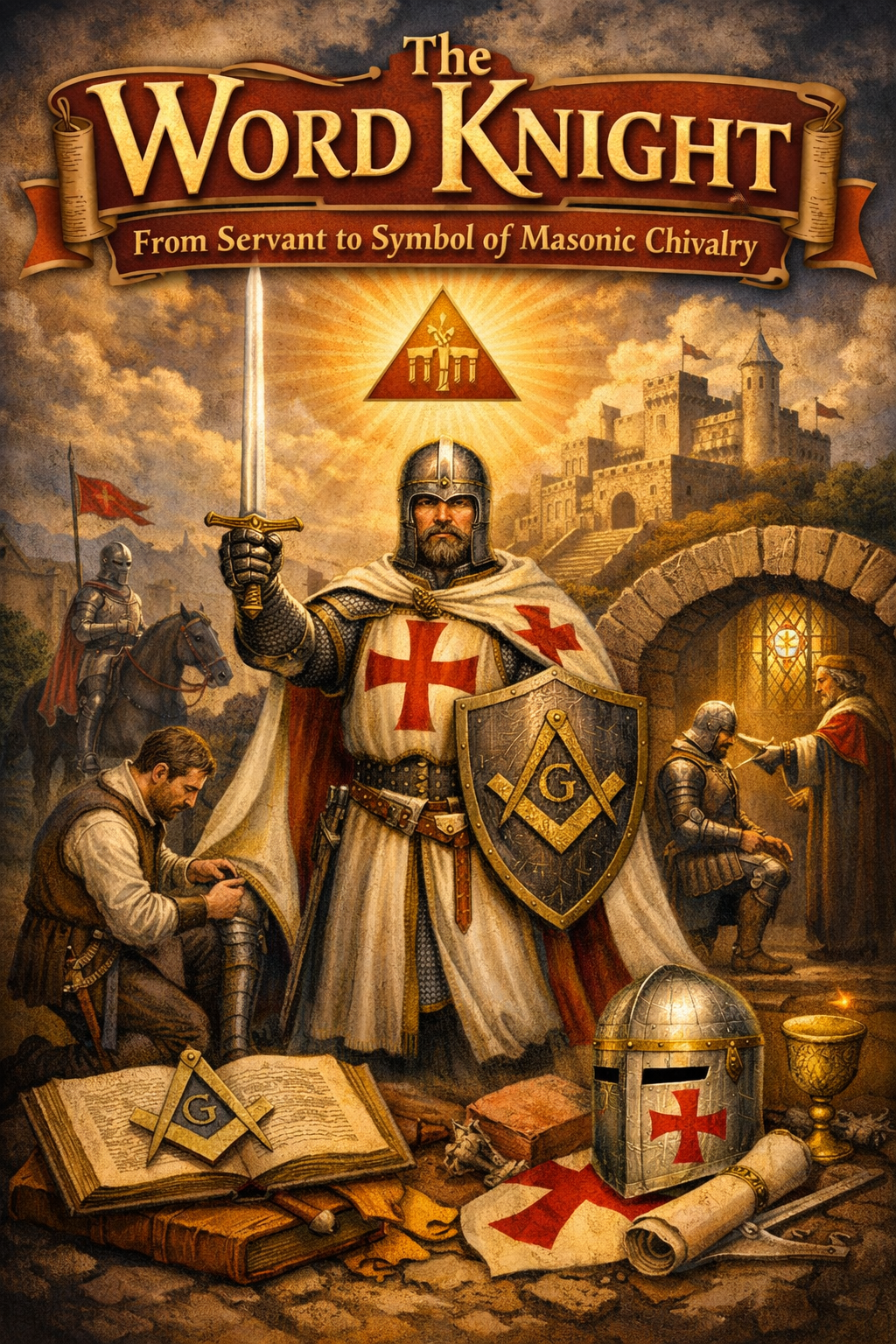
The Masonic Knights Templar, part of the York Rite of Freemasonry, represents a Christian chivalric degree that upholds the ideals of faith, charity, and service rather than serving as a direct successor to the medieval order. Members commit to vows of fidelity and service, reflecting principles of medieval chivalry. The regalia typically includes a white mantle adorned with a red cross, evoking the heritage of the original Templars. This order emphasizes the embodiment of knightly virtues such as courage, honor, and defense of the faith, alongside a commitment to community service.
The Knights of St. Andrew, part of the Scottish Rite of Freemasonry, take their inspiration from St. Andrew—the patron saint of Scotland—whose distinctive X-shaped cross serves as their symbol. Members of this order act as a ceremonial guard or honor society for the Scottish Rite, lending support during rituals and public gatherings. Their values include service, humility, and commitment, echoing the spirit of medieval knights. Unlike the Templar Order, which centers on Christian beliefs, the Knights of St. Andrew highlight Scottish heritage and Masonic involvement, welcoming a diverse range of members.
The Order of Malta, also part of the York Rite of Freemasonry, represents a Christian chivalric order within Masonry and draws inspiration from the traditions of the medieval Knights Hospitaller.
The Order of the Red Cross, which is part of the York Rite of Freemasonry, represents a commitment to truth and justice, incorporating both biblical and historical elements in its symbolism.
The Order of St. Thomas of Acon is a Christian Masonic group that honors the medieval English chivalric tradition, revived in 1974 after thorough historical investigation. It was founded by John E. N. Walker, who discovered records in the Guildhall Library (Operative Masons met in a guildhall and maintained a library, but this is another paper for later) that survived the Great Fire of London. Now known as The Commemorative Order of St. Thomas of Acon, membership is limited to those invited—specifically, Knights Templar who are part of recognized Masonic organizations. Each branch is called a Chapel, and members focus on charitable activities, especially supporting Canterbury Cathedral. The regalia looks similar to that of the Knights Templar, featuring a white tunic and mantle decorated with crimson and white crosses and bronze escallop shells. The Order now has Chapels throughout England, Wales, North America, and other countries.
Masonic knighthood continues the traditions of service and faith established by medieval knights, representing these values symbolically within the fraternity. The Knights Templar in Masonry recognize the courage and commitment of their historical counterparts, while the Knights of St. Andrew highlight Scottish heritage and service among members. Collectively, these groups emphasize that the essence of knighthood lies not solely in combat, but in upholding principles of honor, humility, and dedication to others.