Researched and Written By: Don Goss
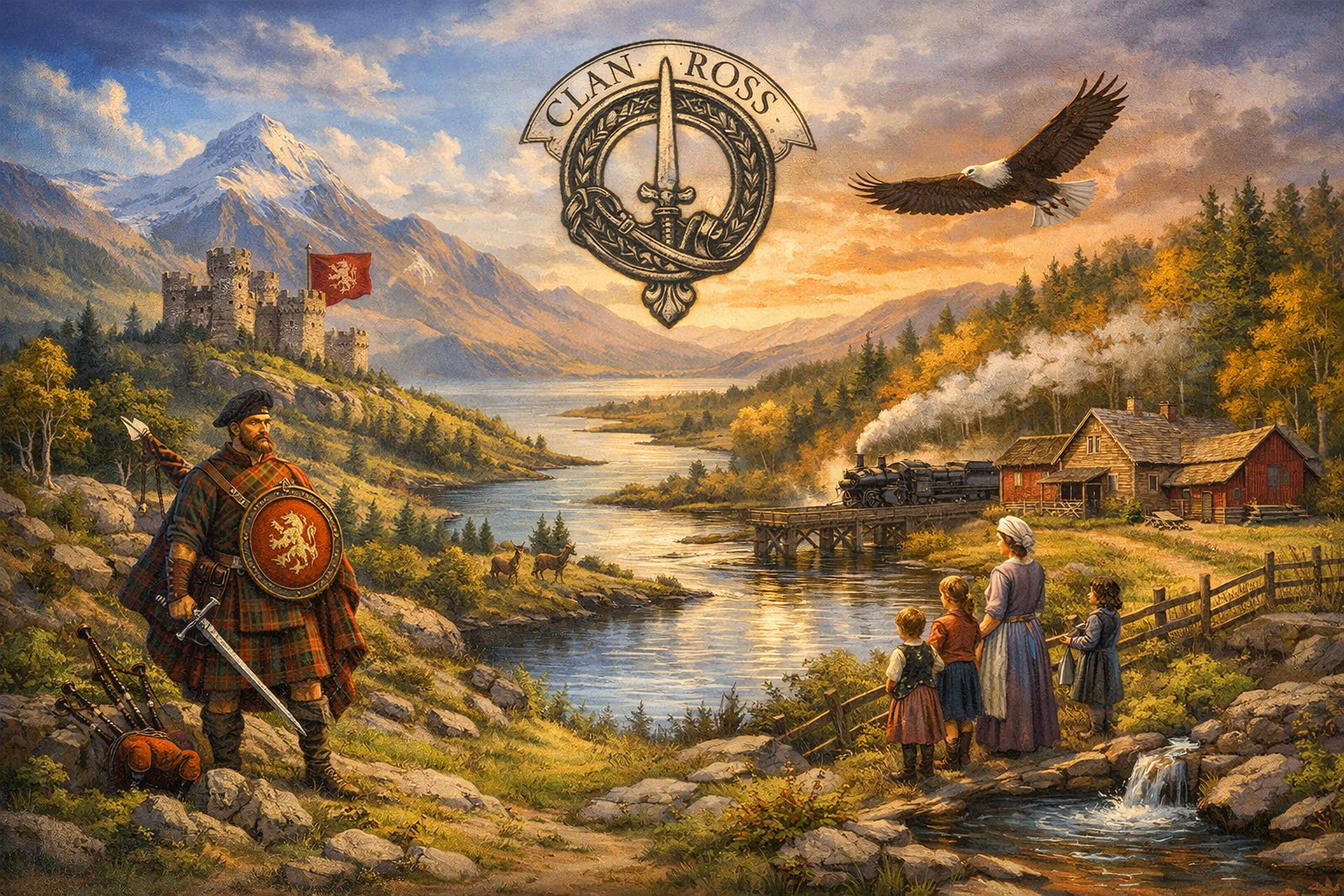
The name Ross carries with it a lineage rooted deep in the ancient soil of Scotland. Its origins lie with Clan Ross, whose homeland stretched across the northern and eastern reaches of the country, bordered by the North Sea and the broad sweep of the Moray Firth. In earlier centuries this region formed part of the old province of Moray, but over time Ross emerged as its own distinct territory and was elevated to an Earldom. At its heart stood Balnagown Castle, seat of the family whose tenants, dependents, and loyal followers formed the historic Clan Ross.
Though the ruling line rose and fell with the shifting decisions of kings, the common people of Ross lived with remarkable continuity, preserving their customs and identity across the centuries.
The Rosses in Early America
Among the earliest and most notable Ross families to settle in America was that of Reverend George Ross, an Episcopal clergyman who came to Pennsylvania. His son, Aeneas Ross, followed him into the ministry, and Aeneas’s own son, George Ross, became a signer of the Declaration of Independence and later served as Chief Justice of Delaware. Another son, John Ross, died during the Revolutionary War, leaving behind a widow who would become one of the most iconic figures in American folklore — Betsy Ross.
The Maine Ross Line
The Maine branch of the Ross family can be firmly traced back to the marriage of Joseph Ross and Margaret ——, recorded in 1753. Their origins remain uncertain. Yet the broader historical context offers clues: during the 17th and 18th centuries, waves of Scots and Scotch‑Irish left Northern Ireland and Scotland due to political upheaval, economic hardship, and religious tension.
Some Scots arrived during Cromwell’s era, settling in the York–Berwick region. Scotch‑Irish communities established themselves around Merrymeeting Bay and along the coast toward Portland. These settlements faced Native American conflicts around 1718 and appealed to the Massachusetts Bay Colony for assistance. Among those believed to have come from York to aid them was a David Ross, thought by some historians to have been of Scottish origin.
Whether Joseph Ross descended from this group remains unknown. The possibility is reasonable, but no evidence confirms or disproves it.
Scottish Identity in a New Land
As generations passed, it would have been natural for the family to lose some of its Scottish ways. Yet a deep affection for Scotland — its heroes, its poetry, its traditions — endured.
Harry Goss, a descendant through the Ross‑Goss line, instilled in his children a reverence for William Wallace, Robert the Bruce, and other champions of Scottish independence. His family remembers evenings spent listening to readings from The Cotter’s Saturday Night and the poems of Robert Burns. The family’s well‑worn copy of G. A. Henty’s Bonnie Prince Charlie remains a treasured heirloom.
As for the meaning of the name Ross, scholars disagree. One tradition holds that it refers to a promontory, describing the land itself. Another claims it means red, perhaps referencing the fair complexion and red hair common among Highland families. The truth remains uncertain.
The Ross Home in Poland, Maine
When the Ross family settled in Poland, Maine, they established their homestead along the Little Androscoggin River, in what is now Mechanic Falls. The house stood at the end of the road leading from Poland Corner over Harris Hill. The Ross‑Goss family lived there until 1888.
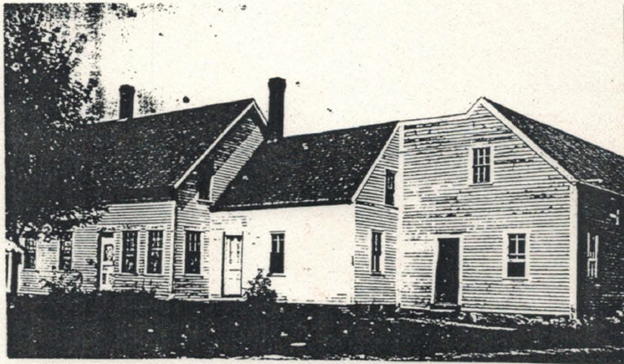
Years later, the construction of the Lewiston–Mechanic Falls highway cut through the old farm, reducing its fields but ending its isolation. Family members long pointed out the spot where the early settlers shot a bear, and the place where young Sarah Ross stood to watch the first train thunder past on the Grand Trunk Railroad, carrying a stick for protection.
The original Ross home burned in the mid‑20th century, but memories of the place — especially the cool, sparkling spring near the Oxbow Bend — remained vivid.
Edward Ross and His Courtship
A cherished family story tells of Edward Ross, then living in North Yarmouth, who had fallen deeply in love with Dorcas Cobb of Poland. Determined, he walked the twenty miles to the Cobb home and asked her father, Zenas Cobb, for permission to court her. After careful consideration, Mr. Cobb granted him half an hour.
Edward must have made excellent use of his time — the brief visit blossomed into a long and happy marriage.
Father Cobb: A Legend in His Own Right
Dorcas’s ancestor, Ebenezer “Father” Cobb, born in 1694 and living until 1801, was a remarkable figure. Spanning three centuries, he lived to nearly 108 years old. Family lore recounts that on his 100th birthday he climbed onto the barn roof and walked the ridgepole from end to end to demonstrate his agility.
Known for his wide circle of acquaintances and lively spirit, he was regarded as a local treasure.