Researched and Written By: Don Goss
The history of the Goss family begins on the wind‑swept shores of seventeenth‑century New England, where the Atlantic shaped both the fortunes and the character of those who lived by it. Among them was Richard Goss, born in Marblehead around 1662 or 1663, a man whose life bridged two rugged coastal communities: Marblehead and Ipswich, Massachusetts, and the remote fishing outpost of Star Island in the Isles of Shoals. For more than a decade he lived on Star Island, serving as a Selectman and raising the first generation of Goss children born in the New World. As the family record notes, “Had home in Ipswich. Lived many years on Star Island, NH. He was a Selectman on Star Island.” His wife, Mary, remains a quiet figure in the historical record, known to us only through the children she bore—five in all, born between Star Island and Ipswich.
A Fisherman’s Son: The First Thomas Goss
Richard’s son Thomas, born around 1700 on Star Island, inherited the maritime world of his father. Before his marriage he had already settled in Gloucester, Massachusetts, a community defined by its deep connection to the sea. In 1727/28 he married Patience Harraden, daughter of Benjamin and Deborah (Norwood) Harraden, a family well known in Gloucester’s early history. Their children—Thomas, Patience, Betsey, and Mary—were all born in Gloucester. When Mary arrived in 1743, the town records noted that Patience was already a widow, marking the early end of Thomas’s life and the beginning of a new chapter for his children.
Thomas of Squam: The First Goss to Settle Danville
The next bearer of the name, Thomas Goss, born May 19, 1730, would become the patriarch of the Maine branch of the family. Known as Thomas of Squam, he grew up in the coastal communities of Gloucester, Sandy Bay (Rockport), and Annisquam before turning inland toward the frontier. In 1786 he became the first Goss settler in Danville, then part of the Pejepscot region.
Thomas married Mary Tarr in 1751, and together they raised a large family whose lives spanned both Massachusetts and Maine. After Mary’s death, Thomas married Eunice Collins Tarr, and later Mary Parsons, both of whom lived with him in Pejepscot. His children included sailors, farmers, and pioneers—men and women who carried the Goss name into the growing settlements of Danville, Durham, Minot, and beyond.
One of the most memorable stories from Thomas’s life concerns his loyal dog, whose adventures became local legend. During a gunning and fishing trip, Thomas and a companion were blown far out to sea and rescued near Chesapeake Bay. The dog was lost in the chaos, yet somehow made his way home on foot, arriving two days before his master. Later, the same dog leapt from a boat to help Thomas land a fish and was killed by a shark. The family record preserves the tale with understated clarity: “The emaciated dog arrived on foot two days earlier… At a later time the dog… was killed by a shark.”
John Goss: Building a Family in Pejepscot
Thomas’s son John, born in Rockport in 1770, married Anna Parsons in 1790. Anna’s father, Jeffrey Parsons, had fought at Bunker Hill and later drowned in 1792, a loss that shaped the young couple’s early years. John and Anna raised twelve children, many of whom became foundational figures in the communities of Pejepscot, Danville, Auburn, Minot, and Poland. Their children’s marriages connected the Goss family to the Dyer, Jordan, Vosmus, Martin, Maxwell, and Nutting families—names that would appear repeatedly in the region’s history.
Levi Sanborn Goss: A Patriarch of Minot
Among John’s children, Levi Sanborn Goss, born in 1806, stands out as a central figure in the family’s Maine story. He married Mercy Dyer in 1830 and later Mary Ann Webb, raising a combined family of thirteen children. Levi farmed near the Little Androscoggin River in Minot, where the Goss homestead stood for generations. The family record notes that Levi, Mercy, Mary Ann, and several of their children are buried “in a cemetery a short distance along the road from the old Goss home in Minot to Hackett’s Mills.”
James Fowler Goss: Soldier and Craftsman
Levi’s son James Fowler, born in 1836, carried the family into the era of the Civil War. He served in the Ninth Maine Infantry, Company B, from 1861 to 1864, seeing heavy combat in numerous engagements. After the war he married Sarah True Ross of Poland, Maine, and became widely known for his skill in meat processing—a trade highly valued by neighboring farmers. James and Sarah raised four children and later moved to Greene, where their son Harry would take up the family mantle.
Harry Adrian Goss: Teacher, Farmer, and Community Leader
Born in 1878, Harry Adrian Goss embodied the blend of intellect, practicality, and community spirit that defined the Goss family. He married twice—first to Abbie Winona Blaisdell, who died tragically young, and later to Ruby Estella Edwards, with whom he raised a large family.
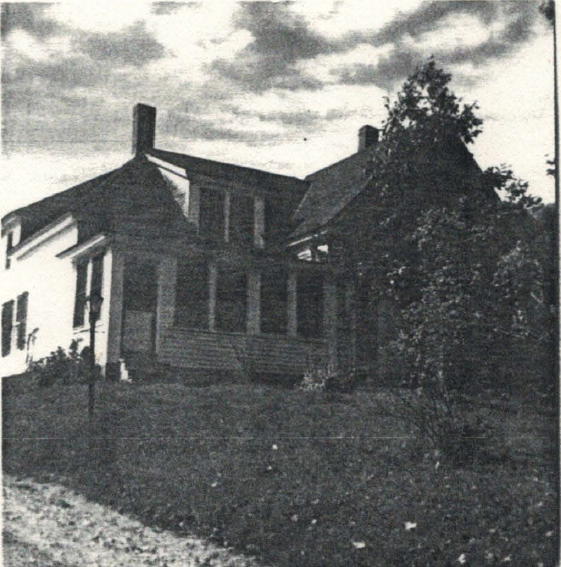
Harry taught school, served as Superintendent of Schools in Greene, worked in a shoe shop and creamery during World War I, and ultimately returned to farming, which he loved deeply. The family record offers a warm portrait of his character: “He was a man of culture and intellect… The brilliance of his conversation was founded upon his knowledge but even more by his ability to listen and understand.”
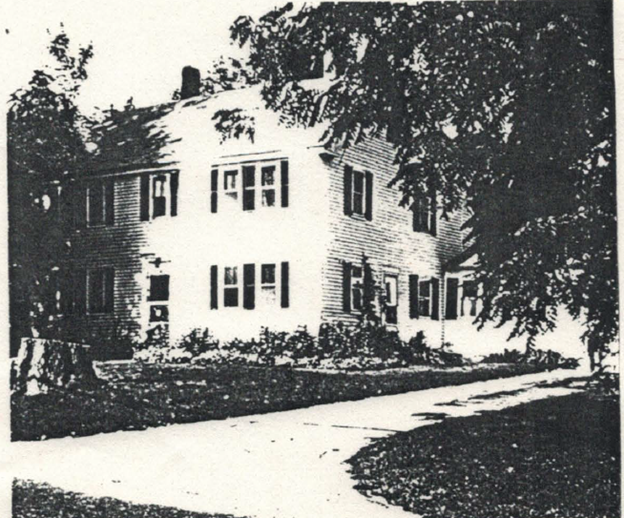
His life also reflects the hardships of rural New England. As a teenager he was “hired out” to a neighboring farm, where the work was harsh and the food poor. The experience left a lasting impression, captured in the family’s understated phrasing: “He never received anything for his labor.”
A Tradition of Service and Resilience
Across generations, the Goss family served in nearly every major conflict from colonial times through the Civil War. They endured the dangers of the sea, the hardships of frontier farming, and the challenges of raising large families in a rugged landscape. Their homes—from Ipswich to Gloucester, from Rockport to Pejepscot, from Minot to Greene—became the anchors of a family that adapted, persevered, and grew.
Pilgrim Lineage: A Remarkable Heritage
Through marriages in later generations, the Goss family became connected to three early settlers of Plymouth Colony: John Alden, Thomas Prince, and Henry Cobb. The family record reflects on this extraordinary convergence: “This trio… all have descendants in this one Maine family more than three centuries later.”
A Legacy Rooted in New England
From the Isles of Shoals to the Maine frontier, the Goss family story is one of endurance, community, and quiet strength. Their history—preserved in cemeteries, homesteads, military service, and family memory—forms a rich chapter in the broader story of New England’s settlement and growth. Through fishermen, farmers, soldiers, teachers, and homemakers, the Goss name has remained woven into the landscape of Danville, Minot, Poland, and Greene for more than three centuries.