
Written By: R∴ W∴ Don Goss
A Narrative Portrait with His Masonic Influence
The story of Paul A. Goss begins in the shadow of the Great Depression, a decade that shaped him long before he ever stepped into a Masonic lodge. The 1930s were years of scarcity, but they were also years that taught him the quiet virtues that would define his life: humility, perseverance, and the belief that a man’s word was his bond. Even as a boy, Paul absorbed the values that Freemasonry would later give structure and language to. He learned early that character mattered more than circumstance, and that a person’s true worth was measured in how he treated others when no one was watching.
By the time he reached adulthood in the 1940s, the world had changed dramatically. War had a way of accelerating time, pushing young men like Paul into responsibility before they were ready. Whether he served directly or supported the war effort from home, the era left its imprint on him. He learned discipline, duty, and the importance of standing firm when the world felt uncertain. These were the same values that would later resonate deeply with him when he entered the Masonic fraternity.
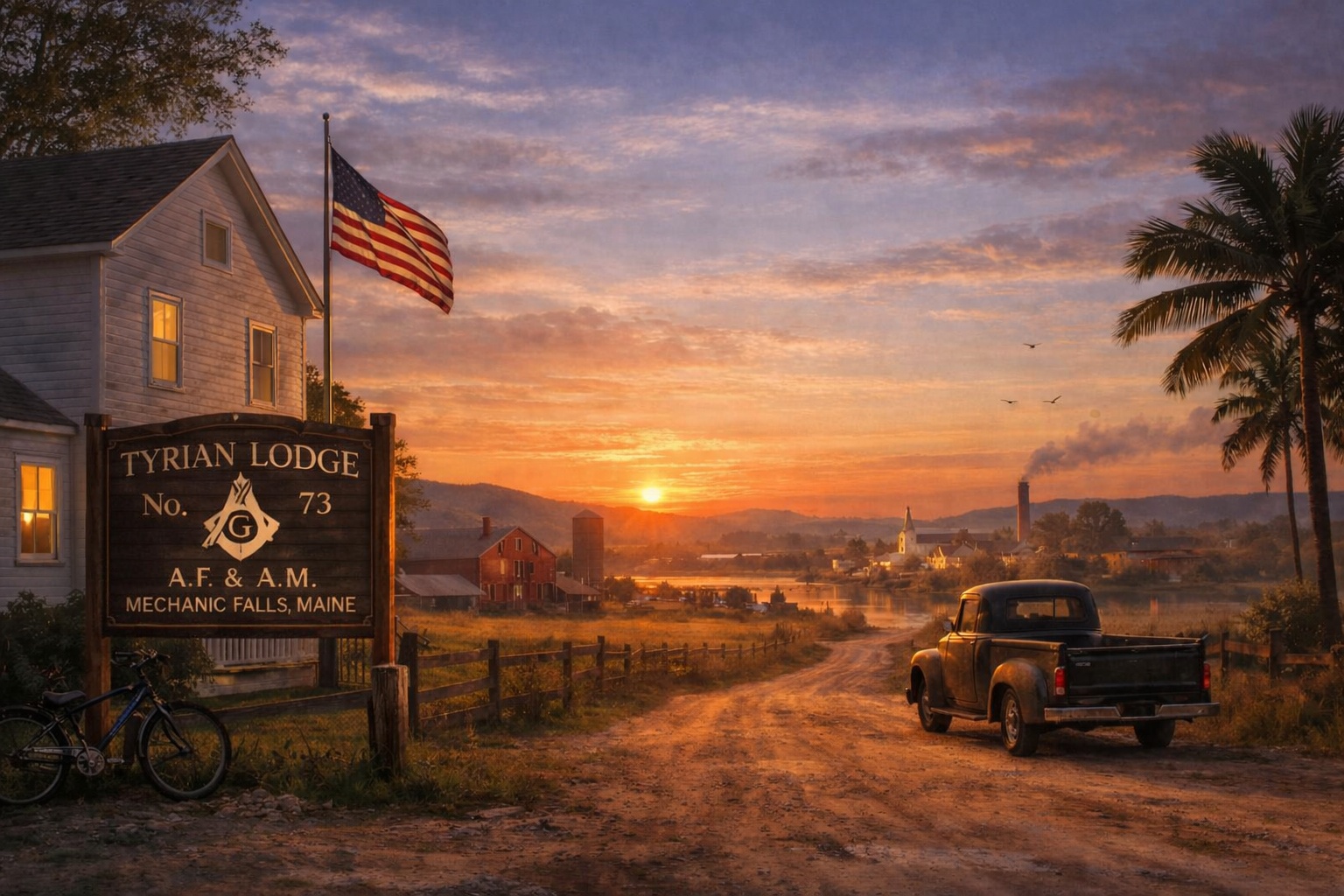
It was in the years after the war, as he began building a family and a future, that Paul found his Masonic home. In the small, close‑knit community of Mechanic Falls, Maine, he became a member of Tyrian Lodge No. 73, a lodge with deep roots and a reputation for producing men of quiet integrity. Paul fit there naturally. He wasn’t drawn to titles or honors; he was drawn to the work, the ritual, and the brotherhood. The lodge gave him something he had always valued but rarely found: a circle of men committed to living uprightly, helping one another, and improving themselves in ways that mattered.
Paul never held office in the lodge, but that was never his aim. He lived his Masonry, rather than wearing it. He was the kind of brother who showed up early, stayed late, and made sure things were done right. He listened more than he spoke. He offered help without being asked. And he carried the teachings of the Craft into every corner of his life — his marriage, his parenting, his work, and his interactions with neighbors and strangers alike.
As the 1950s unfolded, Paul was building the foundation of the life he would one day be remembered for. He became a husband, a father, and a provider, shaping a home grounded in faith, stability, and quiet strength. The lessons he learned in Tyrian Lodge — temperance, fortitude, prudence, justice — were not abstract ideals to him. They were daily practices. His children grew up watching a man who kept his word, who worked hard without complaint, and who treated others with fairness and respect. They didn’t need to be told he was a Mason; they could see it in the way he lived.
The 1960s brought rapid change to the world — civil rights marches, new technologies, shifting cultural tides — but Paul remained steady. His Masonic principles gave him a compass when the world felt noisy and uncertain. Even as life pulled him in new directions, the lessons he learned in that small Maine lodge stayed with him. They shaped the way he approached challenges, the way he treated people, and the way he understood his place in the world.
By the end of the decade, his leadership was being recognized publicly. Newspaper clippings show him receiving awards, standing with that modest smile of his, hands clasped, as though he’d rather be anywhere else than in the spotlight. But those who knew him understood: he wasn’t being honored for ambition. He was being honored for consistency, for integrity, for the quiet influence he had on everyone around him. He embodied the ideal of the Mason who leads not by title, but by example.
The 1970s brought a new chapter. Paul moved to Fort Myers, Florida, trading the cold winters of Maine for the warm breezes of the Gulf Coast. But while his address changed, his character did not. He carried Tyrian Lodge with him — not the building, but the teachings. In Fort Myers, he became known as the same steady, dependable man he had always been. He didn’t seek out a new lodge or pursue titles; instead, he lived his Masonry in the way he treated people, the way he helped neighbors, and the way he carried himself with quiet dignity.
In 1974, another newspaper captured him receiving a leadership award. The photograph shows a man who had earned every bit of the respect he was given — not through loud declarations, but through decades of steady, faithful living. It was a moment that reflected both his public reputation and his Masonic character: humble, dependable, and deeply rooted in the values he held dear.
By the end of the 1970s, Paul had lived through four decades of extraordinary change, yet he remained remarkably consistent. He was a man shaped by hard times but not hardened by them, a man who believed in the quiet power of doing what was right, day after day. His Masonic journey was not a separate chapter of his life — it was woven into everything he did, from the way he raised his children to the way he treated strangers.
His legacy was not loud or dramatic. It was steady, principled, and deeply human. And for those who knew him — and for those who carry his name — it remains a guiding light.